The Electric Meme: A New Theory of How We Think


From biology to culture to the new new economy, the buzzword on everyone's lips is "meme." How do animals learn things? How does human culture evolve? How does viral marketing work? The answer to these disparate questions and even to what is the nature of thought itself is, simply, the meme. For decades researchers have been convinced that memes were The Next Big Thing for the understanding of society and ourselves. But no one has so far been able to define what they are. Until now.

Here, for the first time, Robert Aunger outlines what a meme physically is, how memes originated, how they developed, and how they have made our brains into their survival systems. They are thoughts. They are parasites. They are in control. A meme is a distinct pattern of electrical charges in a node in our brains that reproduces a thousand times faster than a bacterium. Memes have found ways to leap from one brain to another. A number of them are being replicated in your brain as you read this paragraph.

Infidel by Ayaan Hirsi Ali


Ayaan Hirsi Ali was born in Somalia, raised Muslim and came to the Netherlands as a refugee due to an unwanted marriage. After earning her collage degree in political science, she worked for a labour party. Reading The Atheist Manifesto (Atheistisch Manifest) by philosopher Herman Philipse and the Quran pushed her to renounce Islam and become atheist. Now she is a controversial political figure who is against Islamic culture.

This is her astonishing story.


Infidel is an overwhelming book to grasp. Why? Well, because so much has happened so far in Ms. Ali's life. In addition, she takes you into mental spaces where you've never been before and this takes more than a little stretching. 
Here's the bottom line: In the course of her first three and a half decades of life, Ms. Ali moved from being born into a medieval-type lifestyle in Africa and Arabia based on Islam to becoming a prominent social critic of Islam in Europe and the United States who is well listened to wherever she goes. At the same time, she required enormous personal security to keep her alive as those she criticized sought to silence her. 

A Natural History of Rape: Biological Bases of Sexual Coercion by Randy Thornhill and Craig T. Palmer


Rape is horrific for women. The mere thought of rape arouses anxiety, revulsion, and anger, so it is not surprising that women are very ambivalent about subjecting rape to scientific scrutiny. Research on deadly or grotesquely disfiguring diseases probably arouses less distaste and ambivalence. Ambivalence arises out of the mix of anxiety, revulsion, and a desire to have more information.

The authors of A Natural History of Rape are familiar with various expressions of such ambivalence, and they understand why women are so anxious. As scientists, they value knowledge and assume that trying to understand everything about why rape occurs is far more beneficial for women in the long term even if the scientific inquiry inspires anxiety and revulsion. The evolution-minded scientific approach that the authors

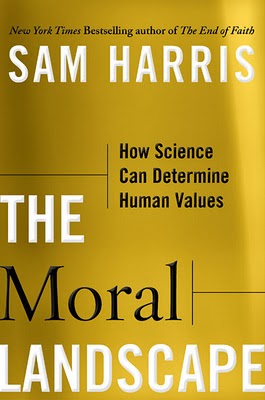
The Moral Landscape: How Science Can Determine Human Values BY Sam Harris

Sam Harris’s first book, The End of Faith, ignited a worldwide debate about the validity of religion. In the aftermath, Harris discovered that most people—from religious fundamentalists to nonbelieving scientists—agree on one point: science has nothing to say on the subject of human values. Indeed, our failure to address questions of meaning and morality through science has now become the most common justification for religious faith. It is also the primary reason why so many secularists and religious moderates feel obligated to "respect" the hardened superstitions of their more devout neighbors.In this explosive new book, Sam Harris tears down the wall between scientific facts and human values, arguing that most people are simply mistaken about the relationship between morality and the rest of human knowledge. Harris urges us to think about morality in terms of human and animal well-being, viewing the experiences of conscious creatures as peaks and valleys on a "moral landscape." Because there are definite facts to be known about where we fall on this landscape, Harris foresees a time when science will no longer limit itself to merely describing what people do in the name of "morality"; in principle, science should be able to tell us what we ought to do to live the best lives possible.

Mind, Self and Society by George H. Mead

Few men of his day lived life more fully than George Mead and fewer still were better qualified to write about it. He was an active participant in civic organizations, took his duties as a citizen seriously, and had traveled far and often so that nothing human was alien. He had read and remembered the books---all the important books in every department of philosophy, the social sciences, and mathematics, not excluding fiction and poetry. And besides all this, his was "a seminal mind of the very first order" which enabled him to see relations and gain insights which gave to familiar facts an undiscovered significance. This above all---he lectured on social psychology for nearly forty years, even before the term became current, and hundreds of scholars now teaching and writing gratefully acknowledge him as their most stimulating teacher.
But Mead never wrote his book on social psychology. The present volume was assembled from the notebooks of students who heard him in the latter part of his career. The editor has, unfortunately, seen fit to give it another title and has taken the liberty to rearrange the material in a fashion that will be deprecated by many who knew Mead and thought they understood him. The task of the editor under such circumstances is one of unusual difficulty; and disappointment over the imperfections of the result yields to the feeling of gratitude to those men who did the best they could, according to their lights, and all who are interested in social psychology should be thankful for even this much.