আমার অবিশ্বাস সম্পর্কে নতুন করে কিছু বলার আছে বলে মনে হয় না। হুমায়ুন আজাদকে যে চেনে সে 'আমার অবিশ্বাস' জানে। আমার অবিশ্বাস, বিশ্বাসের আধাঁর থেকে বেড়িয়ে আলোতে আসার সিঁড়ি। আমার অবিশ্বাস, অজ্ঞতাকে পেছনে ফেলে সামনে এগিয়ে যাবার সাহস। আমার অবিশ্বাস, সত্যের আঘাতে মিথ্যেকে চূর্ণ করার প্রত্যয়।
This is a blog for the freethinkers, for the atheists, for the humanists, for the people who want to know about the world, about the people of the world. There are many free e books here for free download. So come. Join with us. Think different. Make yourself different.
Living Without God:New Directions for Atheis Agnostics, Secularists, and Undecided - BY Ronald Aronson
Books which explicitly and directly critique religion from a secular atheist perspective have been incredibly popular in recent years, but while critique of religion may be a necessary starting point it isn't the ending point — or even very much of the journey. Critique of religion tells us about what isn't reasonable to believe or do, but more is needed to understand what is reasonable to believe or do.Thus the books critiquing religion have created space that needs to be filled by different sorts books and Ronald Aronson make his contribution with Living Without God: New Directions for Atheists, Agnostics, Secularists, and the Undecided. There is hardly anything here that would qualify as a criticism of religion; instead of describing where religions get things wrong Aronson offers ideas about where secular atheists should go instead to get things right.
There are a lot of positives and negatives in Aronson's effort, depending on how you look at it. Basically, the details are all generally good but they are framed and presented in a way that isn't so good and which takes away from the overall effort. The central problem as I see it is that Aronson seems to want to offer an overall philosophy or set of principles for nonbelievers. His motive is good and he's justifiably concerned with the lack of confidence nonbelievers have, at least relative to believers.
The Elegant Universe - Brian Greene
"The basic oneness of the universe is not only the central characteristic of the mystical experience, but is also one of the most important revelations of modern physics. .... As we study the various models of subatomic physics we shall see that they express again and again, in different ways, the same insight--that the constituents of matter and the basic phenomena involving them are all interconnected, interrelated and interdependent; that they cannot be understood as isolated entities, but only as integrated parts of the whole."
- "Dogen’s Insights as to time and being, realized by him introspectively in the 13th century through zazen, and the views of certain contemporary micro- and macro-physicists on time and space, arrived at by them through the principles and methods of science, parallel each other to a remarkable degree. The difference, however, and a deeply significant one, is in the effect these insights had upon these men. Dogen’s realization, being a Self-discovery, liberated him from the basic anxieties of human existence, bringing him inner freedom and peace and deep moral certainty. But, as far as can be seen at this time, no such inner evolution has followed in the wake of these scientific discoveries."
Atheism and Philosophy - Kai Nielsen
The indeterminacy of the modern concept of God has made the distinction between belief and unbelief increasingly problematic. Both the complexity of the religious response and the variety of skeptical philosophies preclude simplistic definitions of what constitutes belief in God. Making the discussion even more difficult are assertions by fundamentalists who dismiss the philosophical perplexities of religious claims as unreal pseudo-problems. Atheism & Philosophy is a detailed study of these and other issues vital to our understanding of atheism, agnosticism, and religious belief. Philosopher Kai Nielsen develops a coherent and integrated approach to the discussion of what it means to be an atheist. In chapters such as "How is Atheism to be Characterized?", "Does God Exist?: Reflections on Disbelief," "Agnosticism," "Religion and Commitment," and "The Primacy of Philosophical Theology," Nielsen defends atheism in a way that answers to contemporary concerns.Why is sex fun- Jared Diamond
Why is Sex Fun? reads like a lecture series rather than a book. Apparently intended to provide the reader with an overview of the latest thinking on the evolutionary aspects of the subject, this short work includes sections on different sexual (and mate) selection strategies employed by males and females (presumably based on unequal "investments" in the methods of getting one's genes into the next generation); lactation (why milk is produced by females, but not, as a rule, males); how and why humans, almost uniquely, came to engage in engage in recreational sex; the unequal domestic roles played by males and females, particularly in child rearing; female menopause (which is, again, nearly unique to humans); and sexual signaling (Diamond considers penis length in human males to be a prime example, but not necessarily a signal directed at females).Richard Dawkins: How a scientist changed the way we think Edited by Alan Grafen and Matt Ridley
If Darwin's revelation of natural selection is "the best idea anyone, any where, ever had", then Richard Dawkins' identification of the "selfish gene" must run a close second. While Darwin's concept explained the workings of life, Dawkins' insight disclosed the mechanism of natural selection. The 1976 publication of "The Selfish Gene" not only stimulated a fresh wave of thinking among biologists, it also stirred public interest and imagination. If life was under the thrall of those strings of chemicals in our cells, how far did that influence reach? In this set of excellent essays on the issues, Dawkins ideas and their impact are presented and discussed. The fruit of his insights are bittersweet, and while most of these writings applaud his probity and communication skills, there is the tang of doubt about some of them.More than two dozen essays comprise this collection. They are topically organised, starting with the biology issues, moving through the logic Dawkins uses to his writing skills. Today, the biology seems straightforward: genes build bodies. Those bodies contain nervous systems and brains - the root of behaviours. At the publication of "The Selfish Gene", it was widely thought that evolution worked at the species' level. Dawkins moved that mechanism much deeper. Its effect is manifested through various ways, with mate choice one of the more significant. Andrew Read explains how evolutionary pressure forces such practices as "lekking" in certain bird species. The mechanism can be readily projected to other creatures, and is manifested in humans, as well.
Nature via Nurture- Matt Ridley
Following his highly praised and bestselling book Genome: The Autobiography of a Species in 23 Chapters, Matt Ridley has written a brilliant and profound book about the roots of human behavior. Nature via Nurture explores the complex and endlessly intriguing question of what makes us who we are.In February 2001 it was announced that the human genome contains not 100,000 genes, as originally postulated, but only 30,000. This startling revision led some scientists to conclude that there are simply not enough human genes to account for all the different ways people behave: we must be made by nurture, not nature. Yet again biology was to be stretched on the Procrustean bed of the nature-nurture debate. Matt Ridley argues that the emerging truth is far more interesting than this myth. Nurture depends on genes, too, and genes need nurture. Genes not only predetermine the broad structure of the brain, they also absorb formative experiences, react to social cues, and even run memory. They are consequences as well as causes of the will.
The Rational Optimist- Matt ridley
Life is getting better—and at an accelerating rate. Food availability, income, and life span are up; disease, child mortality, and violence are down — all across the globe. Though the world is far from perfect, necessities and luxuries alike are getting cheaper; population growth is slowing; Africa is following Yet Matt Ridley does more than describe how things are getting better. He explains why. Prosperity comes from everybody working for everybody else. The habit of exchange and specialization—which started more than 100,000 years ago—has created a collective brain that sets human living standards on a rising trend. The mutual dependence, trust, and sharing that result are causes for hope, not despair.
The meme machine
What is a meme? First coined by Richard Dawkins in his 1976 study The Selfish Gene, a meme is any idea, behavior, or skill that can be transferred from one person to another by imitation: stories, fashions, inventions, recipes, songs, and ways of plowing a field, throwing a baseball, or making a sculpture. It is also one of the most important--and controversial--concepts to emerge since Here, Blackmore boldly asserts: "Just as the design of our bodies can be understood only in terms of natural selection, so the design of our minds can be understood only in terms of mimetic selection." Indeed, The Meme Machine shows that once our distant ancestors acquired the crucial ability to imitate, a second kind of natural selection began: a survival of the fittest among competing ideas and behaviors. Those that proved most adaptive--making tools, for example, or using language--survived and flourished, replicating themselves in as many minds as possible. These memes then passed themselves on from generation to generation by helping to ensure that the genes of those who acquired them also survived and reproduced.
The Electric Meme: A New Theory of How We Think

From biology to culture to the new new economy, the buzzword on everyone's lips is "meme." How do animals learn things? How does human culture evolve? How does viral marketing work? The answer to these disparate questions and even to what is the nature of thought itself is, simply, the meme. For decades researchers have been convinced that memes were The Next Big Thing for the understanding of society and ourselves. But no one has so far been able to define what they are. Until now.
Here, for the first time, Robert Aunger outlines what a meme physically is, how memes originated, how they developed, and how they have made our brains into their survival systems. They are thoughts. They are parasites. They are in control. A meme is a distinct pattern of electrical charges in a node in our brains that reproduces a thousand times faster than a bacterium. Memes have found ways to leap from one brain to another. A number of them are being replicated in your brain as you read this paragraph.
Infidel by Ayaan Hirsi Ali

Ayaan Hirsi Ali was born in Somalia , raised Muslim and came to the Netherlands as a refugee due to an unwanted marriage. After earning her collage degree in political science, she worked for a labour party. Reading The Atheist Manifesto (Atheistisch Manifest) by philosopher Herman Philipse and the Quran pushed her to renounce Islam and become atheist. Now she is a controversial political figure who is against Islamic culture.
This is her astonishing story.
Infidel is an overwhelming book to grasp. Why? Well, because so much has happened so far in Ms. Ali's life. In addition, she takes you into mental spaces where you've never been before and this takes more than a little stretching.
Here's the bottom line: In the course of her first three and a half decades of life, Ms. Ali moved from being born into a medieval-type lifestyle in Africa and Arabia based on Islam to becoming a prominent social critic of Islam in Europe and the United States who is well listened to wherever she goes. At the same time, she required enormous personal security to keep her alive as those she criticized sought to silence her.
A Natural History of Rape: Biological Bases of Sexual Coercion by Randy Thornhill and Craig T. Palmer
The authors of A Natural History of Rape are familiar with various expressions of such ambivalence, and they understand why women are so anxious. As scientists, they value knowledge and assume that trying to understand everything about why rape occurs is far more beneficial for women in the long term even if the scientific inquiry inspires anxiety and revulsion. The evolution-minded scientific approach that the authors
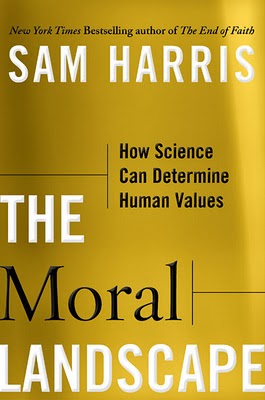
The Moral Landscape: How Science Can Determine Human Values BY Sam Harris
Sam Harris’s first book, The End of Faith, ignited a worldwide debate about the validity of religion. In the aftermath, Harris discovered that most people—from religious fundamentalists to nonbelieving scientists—agree on one point: science has nothing to say on the subject of human values. Indeed, our failure to address questions of meaning and morality through science has now become the most common justification for religious faith. It is also the primary reason why so many secularists and religious moderates feel obligated to "respect" the hardened superstitions of their more devout neighbors.In this explosive new book, Sam Harris tears down the wall between scientific facts and human values, arguing that most people are simply mistaken about the relationship between morality and the rest of human knowledge. Harris urges us to think about morality in terms of human and animal well-being, viewing the experiences of conscious creatures as peaks and valleys on a "moral landscape." Because there are definite facts to be known about where we fall on this landscape, Harris foresees a time when science will no longer limit itself to merely describing what people do in the name of "morality"; in principle, science should be able to tell us what we ought to do to live the best lives possible.Mind, Self and Society by George H. Mead
Few men of his day lived life more fully than George Mead and fewer still were better qualified to write about it. He was an active participant in civic organizations, took his duties as a citizen seriously, and had traveled far and often so that nothing human was alien. He had read and remembered the books---all the important books in every department of philosophy, the social sciences, and mathematics, not excluding fiction and poetry. And besides all this, his was "a seminal mind of the very first order" which enabled him to see relations and gain insights which gave to familiar facts an undiscovered significance. This above all---he lectured on social psychology for nearly forty years, even before the term became current, and hundreds of scholars now teaching and writing gratefully acknowledge him as their most stimulating teacher.But Mead never wrote his book on social psychology. The present volume was assembled from the notebooks of students who heard him in the latter part of his career. The editor has, unfortunately, seen fit to give it another title and has taken the liberty to rearrange the material in a fashion that will be deprecated by many who knew Mead and thought they understood him. The task of the editor under such circumstances is one of unusual difficulty; and disappointment over the imperfections of the result yields to the feeling of gratitude to those men who did the best they could, according to their lights, and all who are interested in social psychology should be thankful for even this much.
The Stuff of Thought: Language as a Window into Human Nature BY Steven Pinker
New York Times bestselling author Steven Pinker possesses that rare combination of scientific aptitude and verbal eloquence that enables him to provide lucid explanations of deep and powerful ideas. His previous books—including the Pulitzer Prize finalist The Blank Slate—have catapulted him into the limelight as one of today’s most important and popular science writers.
Now, in The Stuff of Thought, Pinker marries two of the subjects he knows best: language and human nature. The result is a fascinating look at how our words explain our nature. What does swearing reveal about our emotions? Why does innuendo disclose something about relationships? Pinker reveals how our use of prepositions and tenses taps into peculiarly human concepts of space and time, and how our nouns and verbs speak to our notions of matter.
Forms of Becoming:THE EVOLUTIONARY BIOLOGY OF DEVELOPMENT(EVO-DEVO)
Form and Function is the title of a classic book published in 1 9 1 6, inwhich Edward Stuart Russell reconstructed the history of animal
morphology from Aristotle to the early 1 900s-a long period of time
in which the most important and revolutionary event in the history
of biology took place, including the advent of a world incorporating
evolutionary change. And yet for Russell the most radical choice between
alternative views in the study of animal form was not preDarwinian
conceptions versus those dominated by the methods and
priorities of evolutionary biology. It was instead the more ancient
and perhaps never fully resolved opposition which, at the beginning
of the nineteenth century, saw the two giants of comparative anatomy,
Georges Cuvier and Etienne Geoffroy Saint-Hilaire, facing one
another. The first championed a view that Russell called teleological
and which consists in claiming the primacy of function over form,
while the second defended, with equal conviction and authority, the
view that Russell called morphological, which claims the primacy of
form over function.
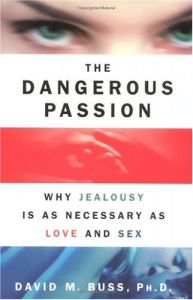
The Dangerous Passion: Why Jealousy Is as Necessary as Love and Sex
Why do men and women cheat on each other? How do men really feel when their partners have sex with other men? What worries women more -- men who turn to other women for love or men who simply want sexual variety in their lives? Can the jealousy husbands and wives experience over real or imagined infidelities be cured? Should it be? In this surprising and engaging exploration of men's and women's darker passions, David Buss, acclaimed author of The Evolution of Desire, reveals that both men and women are actually designed for jealousy. Drawing on experiments, surveys, and interviews conducted in thirty-seven countries on six continents, as well as insights from recent discoveries in biology, anthropology, and psychology, Buss discovers that the evolutionary origins of our sexual desires still shape our passions today.
According to Buss, more men than women want to have sex with multiple partners. Furthermore, women who cheat on their husbands do so when they are most likely to conceive, but have sex with their spouses when they are least likely to conceive. These findings show that evolutionary tendencies to acquire better genes through different partners still lurk beneath modern sexual behavior. To counteract these desires to stray --
The Third Chimpanzee: The Evolution and Future of the Human Animal
We human beings share 98 percent of our genes with chimpanzees. Yet humans are the dominant species on the planet -- having founded civilizations and religions, developed intricate and diverse forms of communication, learned science, built cities, and created breathtaking works of art -- while chimps remain animals concerned primarily with the basic necessities of survival. What is it about that two percent difference in DNA that has created such a divergence between evolutionary cousins? In this fascinating, provocative, passionate, funny, endlessly entertaining work, renowned Pulitzer Prize–winning author and scientist Jared Diamond explores how the extraordinary human animal, in a remarkably short time, developed the capacity to rule the world . . . and the means to irrevocably destroy it.Jared Diamond states the theme of his book up-front: "How the human species changed, within a short time, from just another species of big mammal to a world conqueror; and how we acquired the capacity to reverse all that progress overnight." The Third Chimpanzee is, in many ways, a prequel to Diamond's prize-winning Guns, Germs, and Steel. While Guns examines "the fates of human societies," this work surveys the longer sweep of human evolution, from our origin as just another chimpanzee a few million years ago. Diamond writes:
It's obvious that humans are unlike all animals. It's also obvious that we're a species of big mammal down to the minutest details of our anatomy and our molecules. That contradiction is the most fascinating feature of the human species.
The Dopaminergic Mind In Human Evolution And History
What does it mean to be human? There are many theories of theevolution of human behavior which seek to explain how our brains
evolved to support our unique abilities and personalities. Most of these
have focused on the role of brain size or specific genetic adaptations of
the brain. In contrast, Fred Previc presents a provocative theory that
high levels of dopamine, the most widely studied neurotransmitter,
account for all major aspects of modern human behavior. He further
emphasizes the role of epigenetic rather than genetic factors in the rise
of dopamine. Previc contrasts the great achievements of the dopaminergic
mind with the harmful effects of rising dopamine levels in
modern societies and concludes with a critical examination of whether
the dopaminergic mind that has evolved in humans is still adaptive to
the health of humans and to the planet in general.
Fred H. Previc is currently a science teacher at the Eleanor Kolitz
Academy in San Antonio, Texas. For over twenty years, he was a
researcher at the United States Air Force Research Laboratory where
he researched laser bioeffects, spatial disorientation in flight, and
Subscribe to:
Posts (Atom)